Why we still throw away 25 kilos of food a year
Planning meals for a family: what seven studies say about food waste, eating habits and shopping, and how we take that on in snupp.
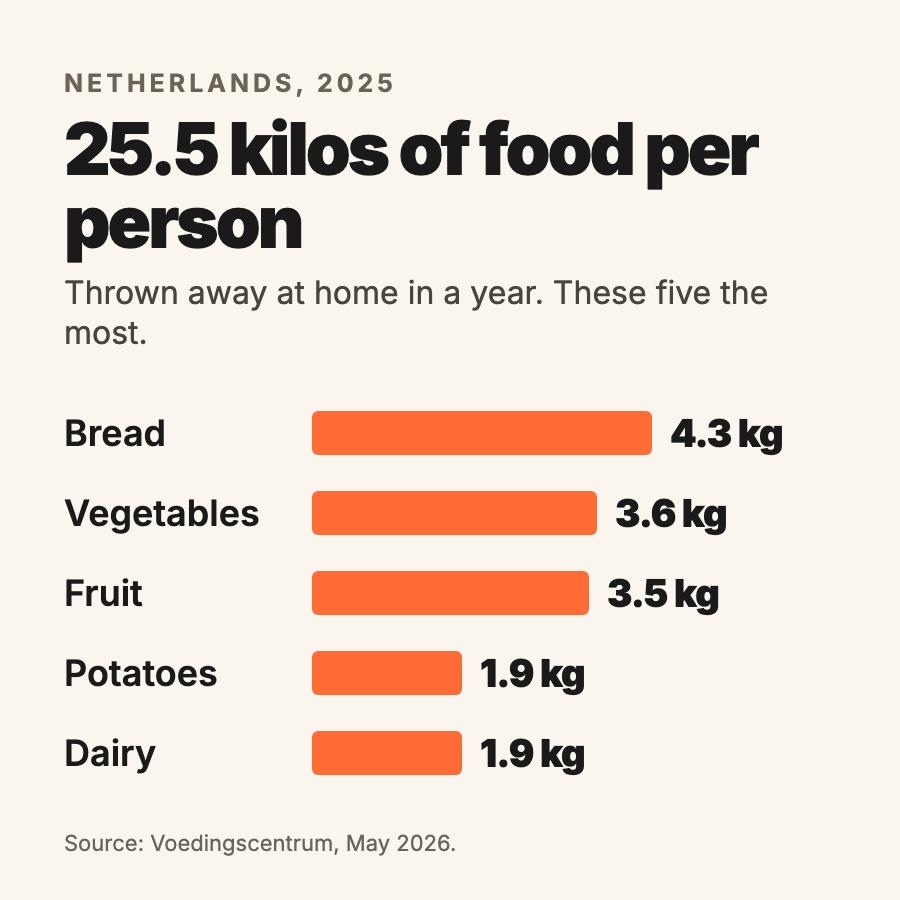
93% of people in the Netherlands say it matters to them to waste as little food as possible. Yet in 2025 Dutch households threw away 25.5 kilos of food per person. That is about 7% of what they bought, worth around €100 per person a year. The figures come from the Voedingscentrum, which has the contents of household bins sorted and weighed every three years.
So caring is not what's missing. What makes it hard is keeping track of it all at once: what food is already in the house, what needs eating first and what is on offer this week. We read seven studies on meal planning, eating habits and food waste. Below are five things they found, and after each one, how we take it on in snupp.
1. Food waste is nobody's plan
Researchers at Wageningen University held 24 focus groups in Germany, Hungary, the Netherlands and Spain. Their conclusion: household food waste is "the unintended result of balancing multiple competing goals". Dinner has to be on the table on time. Everyone has to eat it. There has to be enough. The bill has to stay reasonable. On a Monday evening, half a cauliflower loses to all four.
Their advice is not to tell people to care more. It is to make it easier to reach all those goals at once.
On a busy evening, what wins is whatever is quick, what everyone will eat and what doesn't cost too much. In snupp, a plan starts with your household: your preferences and allergies, and the food you already have at home.
2. Households that waste less do two dull things
The Voedingscentrum's 2026 report says that people who waste less more often shop with a list and check what they have at home before they go. Food going off and a date that has passed are two of the reasons people give most often for throwing food away. Researchers in Spain asked 806 families with children about how they shop and cook. The shopping list was among the key predictors of whether a family said it threw food away.
A list and a look in the cupboard. Nobody will give a conference talk about it.
Anyone can look in the cupboard. What takes effort is keeping track of what is in there and how long it keeps. In snupp, that is kept track of for you: what you already have at home, and when each thing goes off. The menu is built around what has to go first, and the list holds only what is still missing. All you do is snap a photo of your groceries or your receipt.
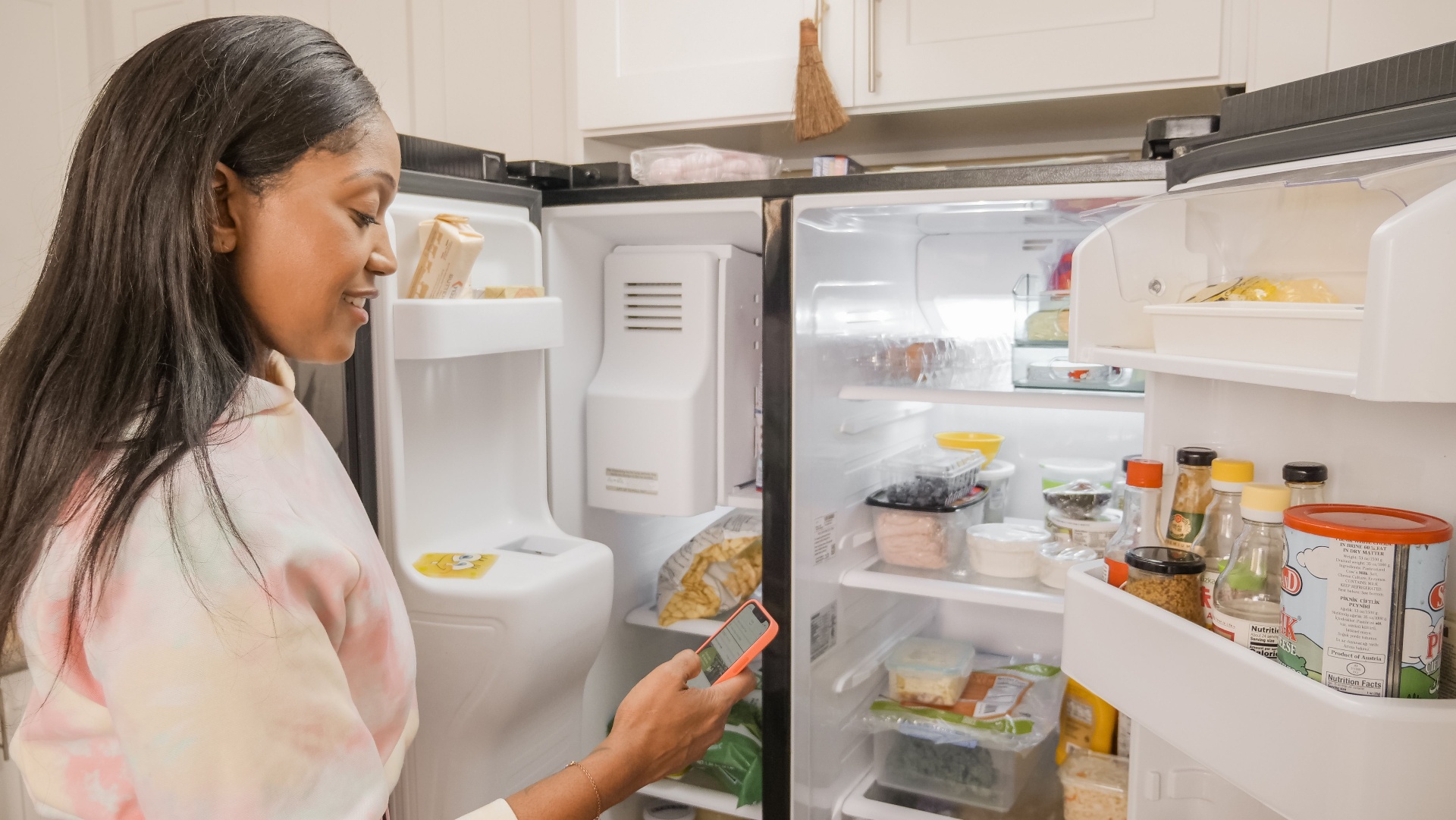
Photo: Kindel Media / Pexels
3. People who plan eat more varied meals
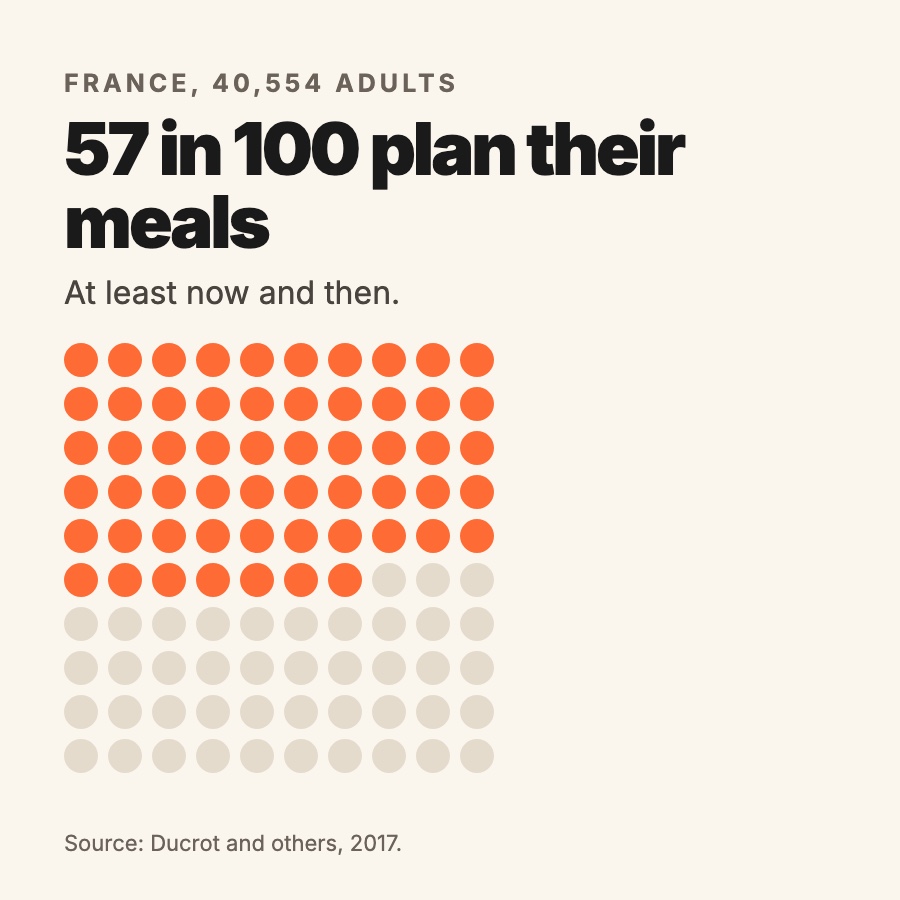
A study in France asked 40,554 adults whether they plan their meals. 57% did, at least now and then. The planners were more likely to eat a wider variety of foods and to follow the national nutrition guidelines more closely. The authors add that their data show a link, not a cause.
There is room for it. In the Dutch food consumption survey of 2019 to 2021, 29% of adults ate enough vegetables to meet the national guideline. In the survey before it, that was 16%.
When you have to decide what's for dinner every evening, the same three dishes keep coming round. In snupp, you plan a whole week in one go, and the week stays varied.
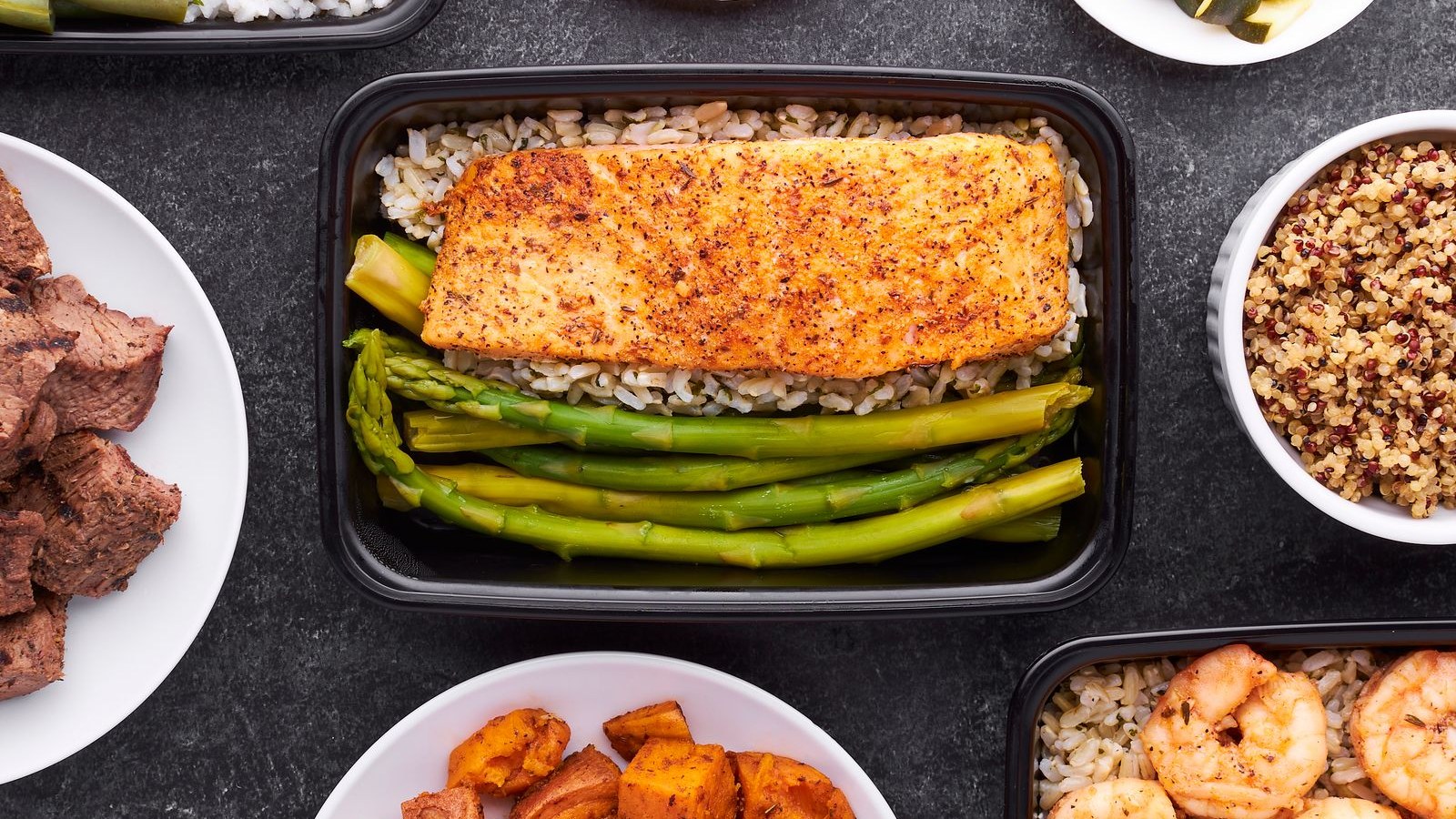
Photo: Pexels
4. Good intentions wear off
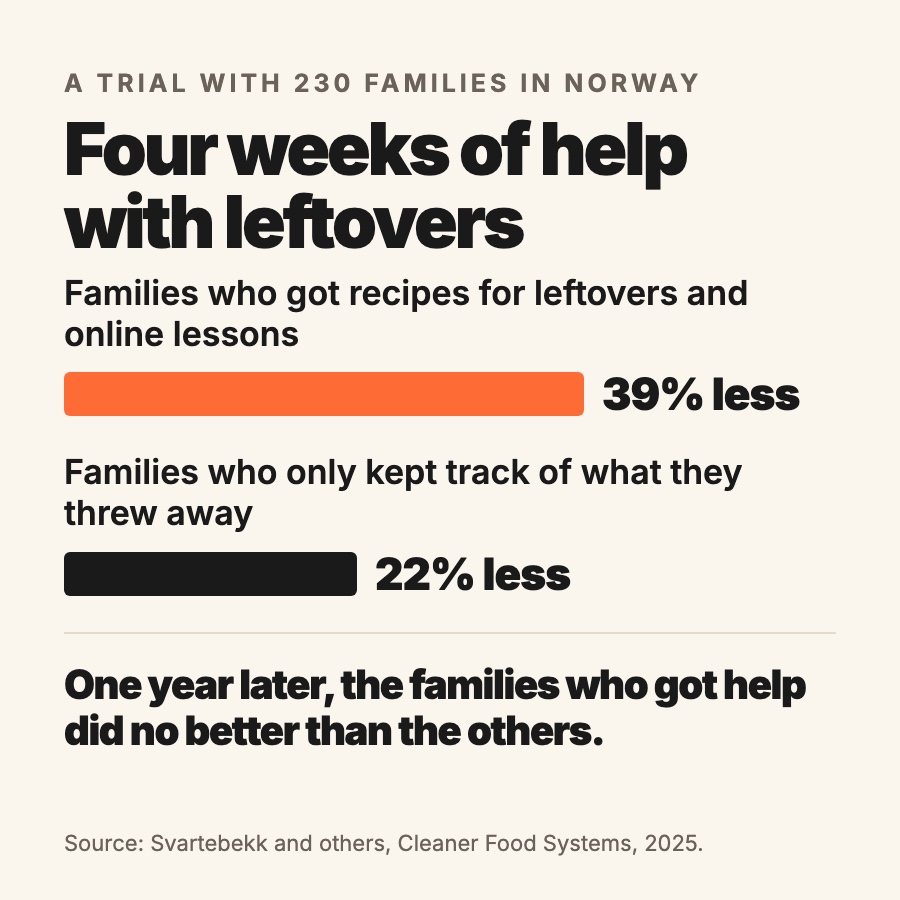
In Norway, 230 families took part in a trial. Half of them cooked dinners built around leftovers for four weeks and followed online lessons. Right after those four weeks they threw away 39% less food. The other half, who only kept track of what they threw away, managed 22% less. A year later the families who got help did no better than the others.
In another trial, in London, Ontario, researchers found that the effect can last long after the assistance has stopped. Two and a half years later, the 47 households that got it were still throwing away 30% less food.
The researchers did not test why it stuck. What we can see is how the help differed from the trial in Norway. There were no lessons. There was a kit that stayed in the kitchen: a storage box, a fridge magnet, freezer stickers and a grocery list pad. And there was one message, which was also the name of the programme: "Reduce Food Waste, Save Money". The Voedingscentrum's own conclusion is that preventing waste is not one behaviour but many small routines, and that they should cost as little effort as possible, at the moment a choice is made.
After a few busy weeks, planning slips. In snupp, nobody has to remember to plan: a new weekly menu is waiting every Monday, built around that week's supermarket offers, and a few taps make it your own.
5. The price at the checkout is a reason people act on
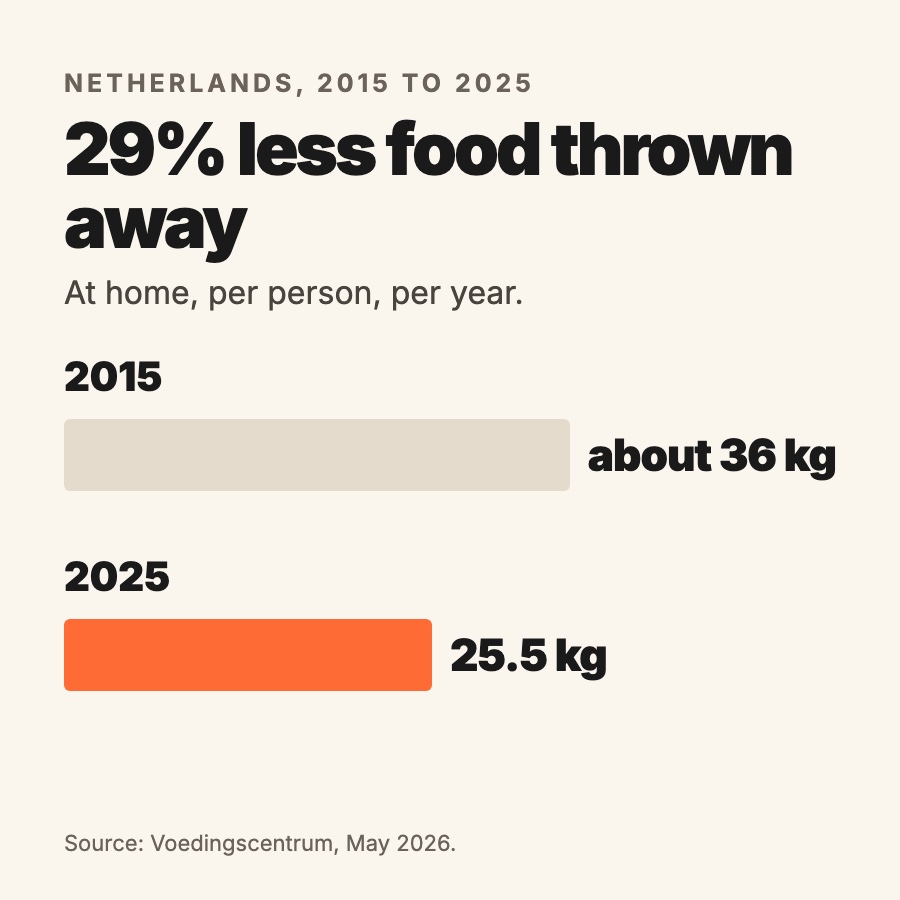
The Voedingscentrum names higher food prices as one possible explanation for the drop in food waste since 2015: 29% less in ten years. Food prices have risen sharply in those years, it says, and the share of income that goes to food seems to be rising too. That may be making people more careful with what they buy. It calls this a possible explanation, next to others such as campaigns and better tools in the supermarket.
Money turns up in the other studies as well. The programme in Ontario, whose effect was still there two and a half years later, put saving money in its name. And the Voedingscentrum puts the food one person throws away in a year at about €100. Food waste is hard to see in your own kitchen. A price is not.
You notice what the groceries cost straight away. What ends up in the bin, much less. In snupp, you see before you leave the house what your list is estimated to cost at each supermarket this week.
Photo: Helena Lopes / Pexels
Why we started snupp
Look at the five points again. A list. A look in the cupboard. A week planned in one go. A plan that is ready every Monday. The price before you leave the house. Add what people keep track of on top of that: calories, the Nutri-Score, vitamins and minerals. None of them is hard. All of them together, every week, is a part-time job nobody applied for.
That is why we started snupp: to make meal planning easier by bringing all those parts together, so that nobody has to spend hours on it.
We want all of that to take one step. Your household, the food you already have at home, this week's offers and the prices at your supermarket come together in one place. What comes out is a week full of meals made for your household. It leaves out recipes that don't fit your preferences and allergies, and it keeps the week varied, so you are not eating chicken three evenings in a row. One shopping list comes with it. It takes minutes. You don't do the planning. You look at the plan and say yes.
We are on a mission to make meal planning effortless. If we get that right, spending less on groceries and throwing away less food come as side effects.
snupp is free to use, on iPhone, in the Netherlands and Belgium
A new weekly menu every Monday
Sources
- Voedingscentrum, Voedselverspilling bij consumenten thuis in Nederland in 2025, May 2026. Summary (PDF) · Factsheet (PDF) · Overview page
- Van Geffen, Van Herpen, Sijtsema and Van Trijp, "Food waste as the consequence of competing motivations, lack of opportunities, and insufficient abilities", Resources, Conservation & Recycling: X 5, 2020. edepot.wur.nl/511556
- Tonini, Muñoz Odina and Gabarrell Durany, "Predicting food waste in households with children", Frontiers in Nutrition 10, 2023. doi.org/10.3389/fnut.2023.1249310
- Ducrot and others, "Meal planning is associated with food variety, diet quality and body weight status in a large sample of French adults", International Journal of Behavioral Nutrition and Physical Activity 14, 2017. doi.org/10.1186/s12966-017-0461-7
- RIVM, "Nederland eet steeds gezonder: meer plantaardig en minder rood en bewerkt vlees", 9 February 2023 (Dutch National Food Consumption Survey 2019–2021). rivm.nl
- Svartebekk and others, "Too good to waste! Short-term and long-term effects of a leftover meals intervention program on household dinner food waste reduction", Cleaner Food Systems 2, 2025. doi.org/10.1016/j.clfs.2025.100008
- Everitt, Van der Werf, Seabrook and Gilliland, "The Proof Is in the Pudding", Circular Economy and Sustainability 3, 2023. doi.org/10.1007/s43615-022-00193-7